Play Brainrot Sudoku Online
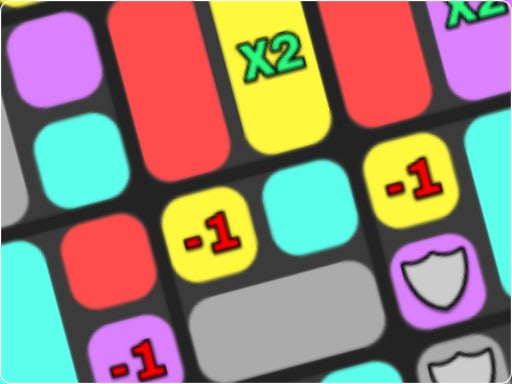
Brainrot Sudoku is a single-player logic puzzle that combines familiar Sudoku rules with the visual humor of internet meme culture. A partially completed grid appears on the screen, but the usual digits are replaced by a set of Brainrot-themed pictures or symbols. Your task is to use the starting clues to determine which icon belongs in every empty cell.
The theme may be chaotic, but the solution is based on order. An icon cannot be repeated within the same row, the same column, or the same outlined region. Each placement must satisfy all three restrictions at the same time. If one symbol already appears in a row, it cannot be selected again anywhere else in that row. The same test must then be applied to the column and region containing the empty cell.
This structure makes the game more than a collection of funny pictures. Brainrot characters provide the visual identity, while elimination and pattern recognition drive every move. You do not need quick reflexes, platforming skills, weapons, or complicated movement controls. Progress comes from reading the grid carefully and choosing the only symbol that fits.
Brainrot Sudoku is therefore a useful addition to a Brainrot game collection dominated by clickers, escape games, shooters, and character battles. It creates a quieter puzzle category for players who prefer to think before acting.
Sudoku Rules with Brainrot Icons Instead of Numbers
Traditional Sudoku normally asks players to place numbers so that none are repeated in a row, column, or box. Brainrot Sudoku keeps that core constraint but changes the visual language. Instead of asking, “Where does number 7 belong?” the puzzle may ask, “Which empty cell can contain this Brainrot icon?”
The substitution does not turn Sudoku into a mathematics test. Numbers in classic Sudoku are labels rather than values: players do not add, subtract, multiply, or divide them. Brainrot pictures work in the same way. Each image represents one unique item in the puzzle set, and your goal is to place every item according to the no-repeat rules.
Before making a move, remember the three basic checks:
- Row: The selected icon must not already appear anywhere across the same horizontal line.
- Column: The selected icon must not already appear anywhere in the same vertical line.
- Region: The selected icon must not already appear inside the same outlined block or section.
A move is valid only when it passes all three checks. Looking at one row without checking its column can produce an incorrect answer. Likewise, a symbol that seems possible from the row and column may still be blocked by the region.
The published game information does not specify that every version always uses one particular grid size. Follow the exact number of icons and the outlined regions shown on the active board. Whether the puzzle presents a beginner-friendly compact layout or a larger Sudoku grid, the same elimination principle applies.
How the Brainrot Sudoku Grid Works
Each puzzle begins with some cells already filled. These fixed pictures are clues and should be treated as part of the board rather than movable decorations. Their positions determine which choices remain possible in nearby rows, columns, and regions.
Empty cells connect several constraints. Consider one blank square and scan horizontally. Remove every icon already used in that row from your possible choices. Then scan vertically and remove every icon already used in the column. Finally, inspect the outlined region and remove its existing icons. If only one symbol survives all three tests, that symbol belongs in the cell.
Another useful approach is to focus on one symbol rather than one cell. Choose an icon and look for a row, column, or region that is missing it. Existing copies of that icon can rule out many positions. When only one location remains available, place the symbol there and use the new information to solve another part of the board.
Every correct placement reduces uncertainty. A difficult board can appear crowded at first, but the puzzle becomes easier to read after several forced moves. This is why solving obvious cells before considering uncertain ones is usually more effective than guessing early.
Brainrot Number Puzzle Without Arithmetic
Players may search for a Brainrot number puzzle because Sudoku is commonly associated with numbers. However, Brainrot Sudoku should not be described as a calculation game. The confirmed version replaces ordinary digits with meme-themed elements, so the player is matching logical identities rather than calculating totals.
You can mentally assign each picture a number if that helps you remember the set, but this is optional. One player may think of a shark-like icon as “one” and a wooden character as “two,” while another player simply recognizes the pictures. Both approaches use the same underlying logic.
This distinction can make the game approachable for children or players who assume Sudoku requires advanced mathematics. The challenge comes from classification, visual memory, and deduction. Being fast at arithmetic gives no special advantage.
A Meme Sudoku Game That Still Rewards Logic
Brainrot Sudoku uses funny images to make an old puzzle format feel less formal. The meme theme can attract players who might ignore a plain black-and-white number grid, while the rules provide a real logical challenge beneath the colorful presentation.
The best strategy is to separate the theme from the constraints when the board becomes difficult. Treat every picture as a distinct symbol. Ask where it already appears, which cells it blocks, and where it is still missing. This keeps a visually noisy puzzle organized in your mind.
Do not rely only on remembering character names. Knowing the name of an Italian Brainrot figure does not reveal where it belongs. The positions of the clues provide all the information needed to solve the puzzle.
For this reason, the page should not be filled with long character biographies. Players arrive to solve a Sudoku grid, not to read a complete Brainrot encyclopedia. A short explanation of the visual theme is enough; the majority of the page should help users understand the rules and improve their solving method.
How to Choose the Best Cell to Solve First
Not every empty cell is equally useful. Some have many possible symbols, while others are strongly restricted by their row, column, and region. Start with the most constrained area of the board.
Look for an Almost-Complete Row
If a row has only one empty cell, compare the icons already present with the complete available set. The missing symbol must fill that space, provided it also agrees with the column and region.
Check Columns with Few Gaps
A nearly complete column offers the same opportunity. Identify what is absent, verify the region, and place the forced icon. Vertical scanning is especially important because players often notice horizontal patterns first and overlook a column conflict.
Inspect the Outlined Regions
Regions can reveal moves that are not obvious from individual rows. List the pictures already inside one block and identify the missing members of the set. Then use the crossing rows and columns to decide where each missing icon can go.
Prefer Cells with One Possible Answer
A cell that accepts only one symbol is called a forced move. Completing forced moves is safer than selecting between several candidates. Each forced placement may create another forced move elsewhere.
Return to the Whole Board
After placing an icon, do not stare only at the same area. The new symbol changes its entire row, column, and region. Scan all three because one move can unlock progress in several directions.
Useful Brainrot Sudoku Solving Techniques
Single Missing Symbol
When a row, column, or region has exactly one blank cell, compare the completed icons with the full set and enter the missing one. This is the simplest deduction and a good place for beginners to start.
Only Possible Position
Sometimes several spaces are empty, but a particular icon can fit in only one of them. Existing copies in crossing rows or columns eliminate every other position. Place the symbol in its only legal location.
Candidate Elimination
For a difficult cell, mentally list the icons that are not present in its row. Remove those blocked by the column and then those blocked by the region. When the list shrinks to one, the answer is determined.
Repeated Scanning
A board that appears stuck may contain information created by your most recent moves. Scan every row, column, and region again. Sudoku is often solved through several passes rather than one continuous path across the grid.
Symbol Mapping
If two meme icons look similar, give them short mental labels based on a clear feature such as color, shape, or object. Accurate identification prevents you from treating two different symbols as identical or overlooking a duplicate.
Contradiction Checking
If a move causes the same picture to appear twice in one row, column, or region, something is wrong. Recheck the most recent uncertain placement instead of changing several correct clues around it.
Why Guessing Usually Makes the Puzzle Harder
Random guessing may fill a cell quickly, but it can create a hidden contradiction that becomes visible only several moves later. By then, it may be difficult to identify which earlier choice caused the problem.
When two or more symbols seem possible, leave the cell temporarily and solve another area. A later placement may eliminate one candidate and turn the uncertain cell into a forced answer.
If the embedded version offers an erase, reset, check, hint, or note control, use it according to the labels visible in the interface. These functions are not consistently documented by the distributor, so they should not be promised as universal features. The basic puzzle can still be solved through careful elimination with the confirmed click-or-tap input.
Brainrot Sudoku for Kids and Beginners
Brainrot Sudoku may appeal to children because recognizable pictures can feel friendlier than a formal number grid. The controls are simple, there is no need for fast keyboard input, and the task can be explained with one rule: do not repeat the same picture in a row, column, or region.
For a first attempt, an adult or teacher can ask the player to solve only the most obvious spaces. Begin with a row or region that is nearly complete, name the missing icons, and check each possible location together. This turns an intimidating full grid into a sequence of small questions.
The game can exercise attention, visual discrimination, working memory, and elementary logical elimination. However, it is primarily a casual browser puzzle and should not be presented as a formal educational course or a guaranteed way to improve academic performance.
Parents should also review the surrounding website and any advertising shown near the embedded game. The Sudoku mechanic itself is non-violent, but suitability depends on the complete browsing environment as well as the puzzle content.
Is Brainrot Sudoku Easy or Difficult?
The difficulty of a Sudoku puzzle depends on the arrangement of its starting clues and the deductions needed to complete the board. A colorful theme does not automatically make the logic easier. Some boards may provide many obvious placements, while others require repeated scanning and closer candidate elimination.
The distributor does not publish a confirmed list of difficulty modes for Brainrot Sudoku. Do not promise Easy, Medium, Hard, Expert, “Newbie,” or “Max Aura” options unless those choices are visible in the exact version embedded on the page.
Beginners can still make any board more manageable by solving the fullest rows, columns, and regions first. Experienced players can challenge themselves to avoid guessing and complete the puzzle through logical moves only.
Portrait Puzzle Play on Desktop and Mobile
Brainrot Sudoku is distributed as a mobile-ready browser game with a 720 × 1280 portrait layout. This tall format is particularly suitable for phones because the grid and symbol choices can be arranged vertically without requiring a wide landscape screen.
On a desktop or laptop, use the mouse to select a cell and then choose the appropriate Brainrot symbol. A narrow, centered game window will normally match the intended portrait presentation better than stretching the board across a very wide monitor.
On a compatible phone or tablet, tap the empty cell and the symbol you want to place. Portrait orientation should provide the most natural layout. If the board appears cropped, scroll the hosting page carefully, enter fullscreen when available, or reduce browser interface elements so the full game area remains visible.
The official instructions simply state that players should click and play Sudoku. No keyboard movement, controller support, or complex gesture system is required for the confirmed core gameplay.
Brainrot Sudoku Strategy for Faster Solving
- Learn the icon set first. Look at every available symbol and note any pictures that could be confused with each other.
- Scan for nearly finished groups. Rows, columns, and regions with fewer empty cells are usually easier to solve.
- Use all three constraints. Never place an icon after checking only the row.
- Complete forced moves. Prioritize cells or symbols with only one legal position.
- Rescan after every placement. One new icon changes three groups at once.
- Delay uncertain choices. Move elsewhere instead of guessing between several possibilities.
- Check for visual duplicates. Similar-looking meme icons can cause accidental rule violations.
- Correct the earliest doubtful move. If the board reaches a contradiction, review where deduction first gave way to guesswork.
How Brainrot Sudoku Differs from Other Brainrot Puzzle Games
Brainrot Sudoku is a constraint-based grid puzzle. It does not ask you to merge identical characters for higher values, rearrange pieces into a picture, identify hidden differences, guess a character name, or sort colored liquid between bottles.
Each of those genres tests a different skill. A merge game focuses on space management and combination order. A visual-difference game tests observation. A quiz tests memory. A water-sort puzzle tests sequence planning. Sudoku requires the player to satisfy several overlapping no-repeat rules across the same grid.
For an image-reconstruction challenge, play Italian Brainrot Drag Merge Puzzle . It asks you to rearrange shuffled sections and connect the correct neighboring pieces instead of completing rows and columns.
For a different observation challenge, try Italian Brainrot Spot the Differences . That game asks you to compare two similar scenes and locate changed details before the time and mistake limits are exhausted.
Why Play Brainrot Sudoku?
- Classic Sudoku-style deduction with a meme-themed visual twist
- Brainrot icons replace ordinary number entry
- Clear row, column, and region restrictions
- No arithmetic knowledge required
- Single-player logic gameplay without combat or chase scenes
- Simple click and tap controls
- Mobile-ready portrait presentation
- Suitable for short puzzle sessions or slower careful solving
- Encourages scanning, elimination, and pattern recognition
- A different experience from Brainrot clickers, shooters, and merge games
- Free browser play without installing a separate game client
Brainrot Sudoku works because it does not replace logical structure with memes. It uses the theme to make the board look playful while retaining the central satisfaction of Sudoku: finding one certain answer, using it to reveal the next, and gradually turning a confusing grid into a complete solution.